Walking the Seven Sisters
Two hours south, the chalk runs its white wave to the sea — and the edge is undercut and falls without warning. The five-meter rule is the page’s first fact; the postcard is taken from Seaford Head anyway.
The short version
- The route runs London Victoria to Seaford or Eastbourne in about ninety minutes with a change, then the coastal bus (the 12-route corridor) linking Seaford, Exceat, Birling Gap, and Eastbourne — the walk plans itself between any two stops.
- The safety register per the alarm is the page’s first content: the chalk face erodes continuously, overhangs are invisible from above, cliff falls happen without warning in every season, and the posted guidance — several meters back, always — has fatalities behind it, not caution theater.
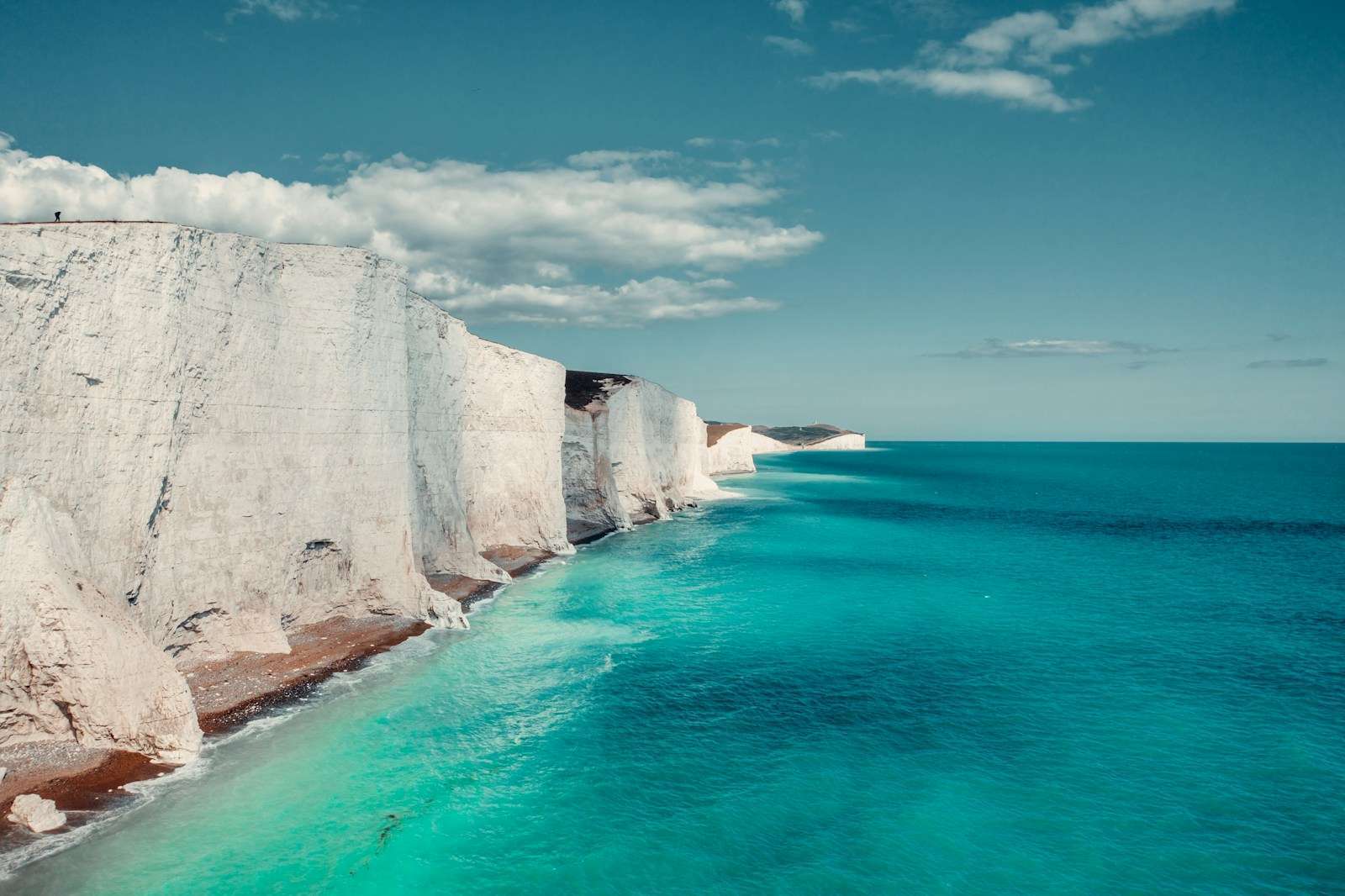
- The Coastguard Cottages viewpoint on Seaford Head frames the classic Seven Sisters photograph — the white wave of chalk beyond the Cuckmere’s mouth — from safe, legal, and frankly better ground than the cliffs themselves offer.
- The classic walk runs Seaford over the Head, down to Cuckmere Haven, then the Sisters’ rollercoaster to Birling Gap — three to four hours of undulating turf — with the fuller Eastbourne finish past Beachy Head adding two more; every stage exits to the bus.
- Birling Gap — National Trust, with the metal beach staircase, café, and facilities — splits the route per the alarm; visitor information at nationaltrust.org.uk, and the beach below walks only on a checked falling tide, since the sea reaches the base at high water.
- Beachy Head — the taller sibling east of the Sisters with its red-and-white lighthouse in the sea below — extends the day; the same edge rules apply at greater height, and the South Downs Way carries the whole route on national-trail waymarking.

Getting there
Trains split the approach: Seaford for the west-to-east classic (the viewpoint first, the light behind you all afternoon), Eastbourne for the reverse. The coastal bus corridor stitches every exit, running at practical frequency in season — photograph its timetable at your starting stop, per this network’s standing habit. Carry water and wind layers; the tops are exposed, shadeless, and breezier than the valley promised. The Cuckmere valley visitor stop at Exceat shortcuts the route for shorter versions.
The walk
From Seaford’s esplanade, climb the Head to the Coastguard Cottages for the alarm’s postcard — the Sisters arranged beyond the river mouth, the photograph banked before any cliff walking begins — then drop to Cuckmere Haven’s shingle and meanders. The Sisters themselves are honest work: seven (arguably eight) chalk summits in succession, turf underfoot, the Channel below, and the five-meter rule in force at every rise — the views need no edge, and the drone footage you’ve seen was taken by machines with no bones to break. Birling Gap lands mid-route: café, facilities, and the staircase to the beach when the checked tide permits — the chalk platforms and fallen blocks below give the cliffs their scale from the only safe angle. The Beachy Head extension climbs bigger and busier to the lighthouse view; the Eastbourne descent ends at the pier with trains waiting. Every segment retreats to the bus when legs or weather vote.
When to go
April through October runs the turf dry and the bus frequent — May and June add wildflowers and skylarks, September the clearest light. Winter walks are legitimate and stark with shorter buses and real wind; storm days move the whole visit to the viewpoint and café register, since gusts and cliff edges hold no negotiation. The tide table is a year-round instrument per the alarm: beach access at Birling Gap works the falling tide only, and the Cuckmere’s beach likewise. Summer weekends crowd Birling Gap’s ladder; the through-walk thins the company within minutes either side.
Frequently Asked Questions
Is the edge danger overstated?
No — chalk falls are regular, documented events, and the undercut geometry means the lip can be cantilevered air. Fatalities and near-misses recur, usually involving photography. The five-meter guidance per the alarm is the minimum, wind adds margin, and no image improves on the one from the Coastguard Cottages taken at zero risk.
How hard is the full walk?
Seaford to Birling Gap runs three to four rolling hours; the Eastbourne finish makes five-plus with Beachy Head’s climbs. It’s turf paths and stiles rather than scrambling — real cumulative ascent disguised as gentle waves. The bus corridor per the alarm converts any overreach into a shrug.
Why are the cliffs so white?
Chalk — the compressed remains of marine plankton laid down in the Cretaceous — kept white precisely by the erosion that makes the edge lethal: the face falls faster than it weathers grey. The Sisters recede measurably by the decade, which is the whole geology lesson in one fact.
Can I walk on the beach below?
At Birling Gap via the staircase on a checked falling tide, yes — chalk platforms, rock pools, and the cliffs at their full scale. High water reaches the base with no exit, which is why the tide check per the alarm is a rule rather than advice. Cuckmere Haven’s beach runs the same logic.
Seven Sisters or the White Cliffs of Dover?
The Sisters for the walk — the repeating wave of summits is the better hike and the better photograph; Dover for history-and-castle framing. Serious walkers choose Sussex; the postcard argument was settled by every film crew that chose these cliffs to play Dover’s.