Rye, the Smugglers’ Town
A medieval hill town that used to be a port — an hour and ten minutes out, with the best-preserved old street in England at the top.
The short version
- Take the high-speed train from St Pancras to Ashford International (38 minutes), then the Marshlink line to Rye (21 more) — about an hour and ten with the change. Times at nationalrail.co.uk.
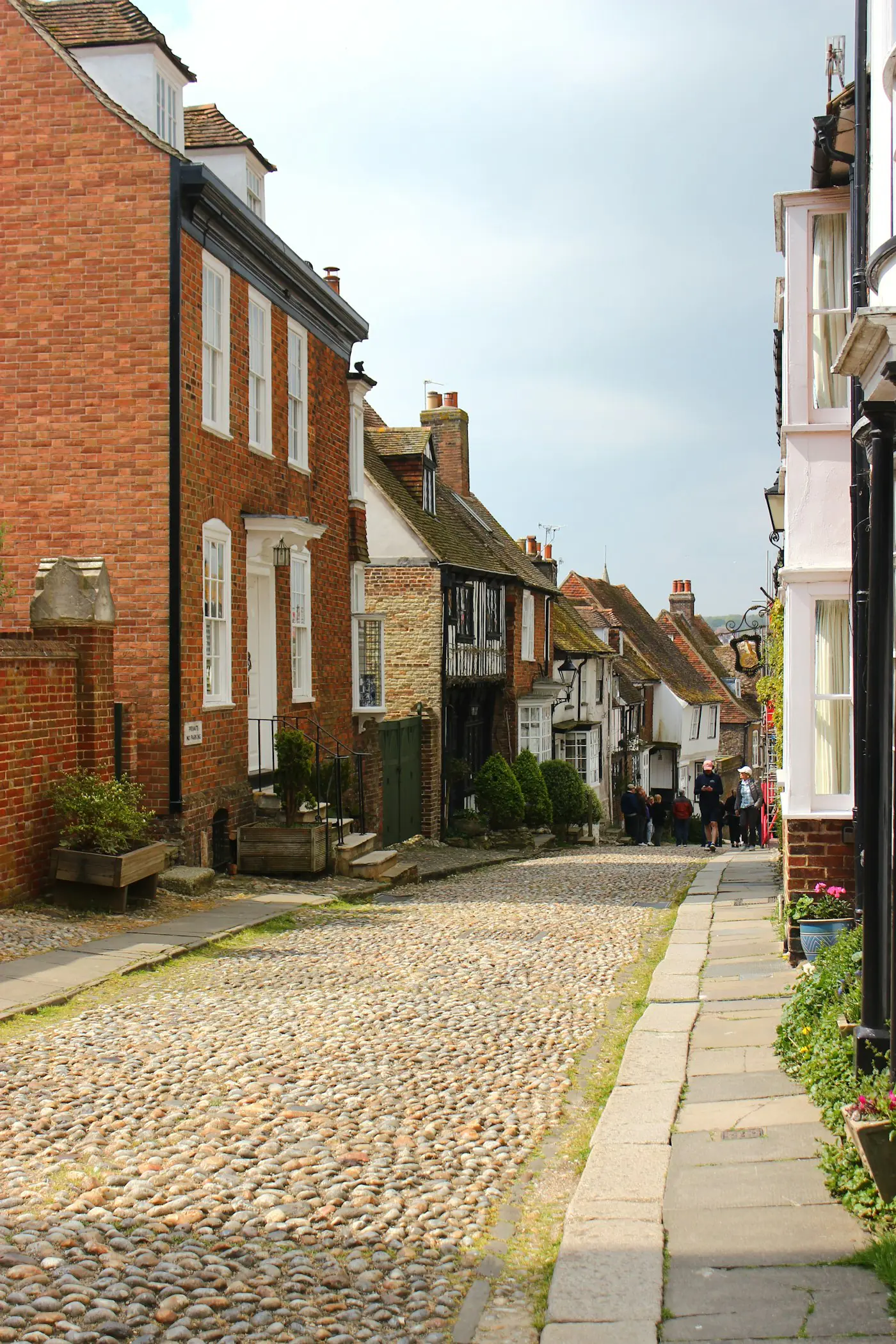
- Mermaid Street is the postcard: steep cobbles, leaning timber, and the Mermaid Inn, rebuilt in 1420 and once the openly acknowledged headquarters of the Hawkhurst Gang smugglers.
- Two towers, £5 each: the 13th-century Ypres Tower with its small museum and estuary view, and St Mary’s church tower, whose ticket lasts a year and whose turret clock has kept time since about 1561.
- Lamb House, the Georgian home where Henry James wrote three late novels — and E.F. Benson later set Mapp and Lucia — is run by the National Trust; details at nationaltrust.org.uk.
- Camber Sands, the dune beach, is a short ride on the 102 bus from the station; Rye Harbour Nature Reserve, with its 280-plus recorded bird species, is the quieter walk the other way.

Getting there
The fast route is St Pancras to Ashford International on the high-speed line, 38 minutes, then the little Marshlink train to Rye in 21 more — around an hour and ten minutes all told, with the change usually a same-platform affair. Slower direct-ish routes via Hastings exist and take closer to two hours. Rye station sits at the bottom of the town; everything medieval is a five-minute climb. For Camber Sands, the 102 bus leaves from stop B outside the station.
The day
Climb Mermaid Street first, before the light gets flat and the crowds get thick — the cobbles, the tilted rooflines, and the house names (The House Opposite, The House with Two Front Doors) are the town’s whole argument, and the Mermaid Inn’s fireplaces and priest holes come with genuine smuggling history: the Hawkhurst Gang drank here armed and unbothered in the 1730s. At the top, Church Square and St Mary’s — climb the tower past the bells for the roofscape and the sweep of Romney Marsh, and note the clock, ticking since Elizabeth I was young. The Ypres Tower behind it held the town’s defenses and later its jail; its museum keeps a rare smugglers’ signalling lamp. Lamb House is the literary stop — Henry James in the flesh, Mapp and Lucia in the fiction. Lunch on scallops if the season allows, then the 102 bus to Camber Sands for the only proper dune beach in the southeast, or the flat walk out to Rye Harbour’s shingle and hides. The sea abandoned Rye centuries ago — the town it stranded is the reward.
When to go
April through October for the full town-plus-beach day; Camber needs warmth but Rye itself is a year-round pleasure, and autumn light on the tiled roofs is the photographers’ pick. Late February brings Scallop Week, when the fishing fleet’s catch takes over the menus — the town’s best eating fortnight. Summer Saturdays are the crush; a sunny Tuesday is the same town with room to breathe.
Frequently Asked Questions
How do you get to Rye from London?
St Pancras to Ashford International by high-speed train, 38 minutes, then the Marshlink line to Rye, 21 minutes — about 1 hour 10 in total. The connection is short and usually cross-platform.
Is Rye walkable?
Entirely — the medieval town is a few steep, cobbled streets on one hill, five minutes from the station. Flat shoes with grip matter more than fitness; those cobbles have turned centuries of ankles.
What is the smuggling story?
Rye ran on contraband in the 1700s, and the Hawkhurst Gang — the era’s most notorious outfit — used the Mermaid Inn openly as a base. The inn, the tunnels, and the Ypres Tower museum’s signalling lamp all survive from that economy.
Is Camber Sands worth adding?
On a warm day, yes — miles of sand and dunes, ten minutes on the 102 bus from Rye station. Check the return times; the bus, not the beach, sets your schedule.
Why is Rye no longer a port?
The sea retreated. Storms and centuries of silt pushed the coastline out, stranding this Cinque Ports harbor two miles inland — which is why a medieval port town survived intact on what is now a quiet hill above the marsh.