The Cotswolds from London
Ninety minutes from Paddington, the Cotswolds are a region, not a place — pick a cluster and a walk, not six villages and a coach seat. The direct train to Moreton-in-Marsh is the one true rail door.
The short version
- The rail door per the alarm is Moreton-in-Marsh: direct trains from Paddington in about ninety minutes (nationalrail.co.uk), landing a working market town on the hills’ northeastern edge — the only true station among the famous villages.
- The region-not-a-place rule is the geography: the Cotswolds run some 80 miles of limestone hills across five counties as a National Landscape (cotswolds-nl.org.uk), and the honey-stone villages scatter across it — the pick-a-cluster rule per the alarm is the difference between a day and a windshield tour.
- The Moreton cluster is the car-free classic: Stow-on-the-Wold (the hilltop market square, the yew-framed church door) and Bourton-on-the-Water (the low bridges, the model village, and the crowds that fame brings) connect by local bus, with Moreton’s own Tuesday market and coaching-inn high street as the anchor.
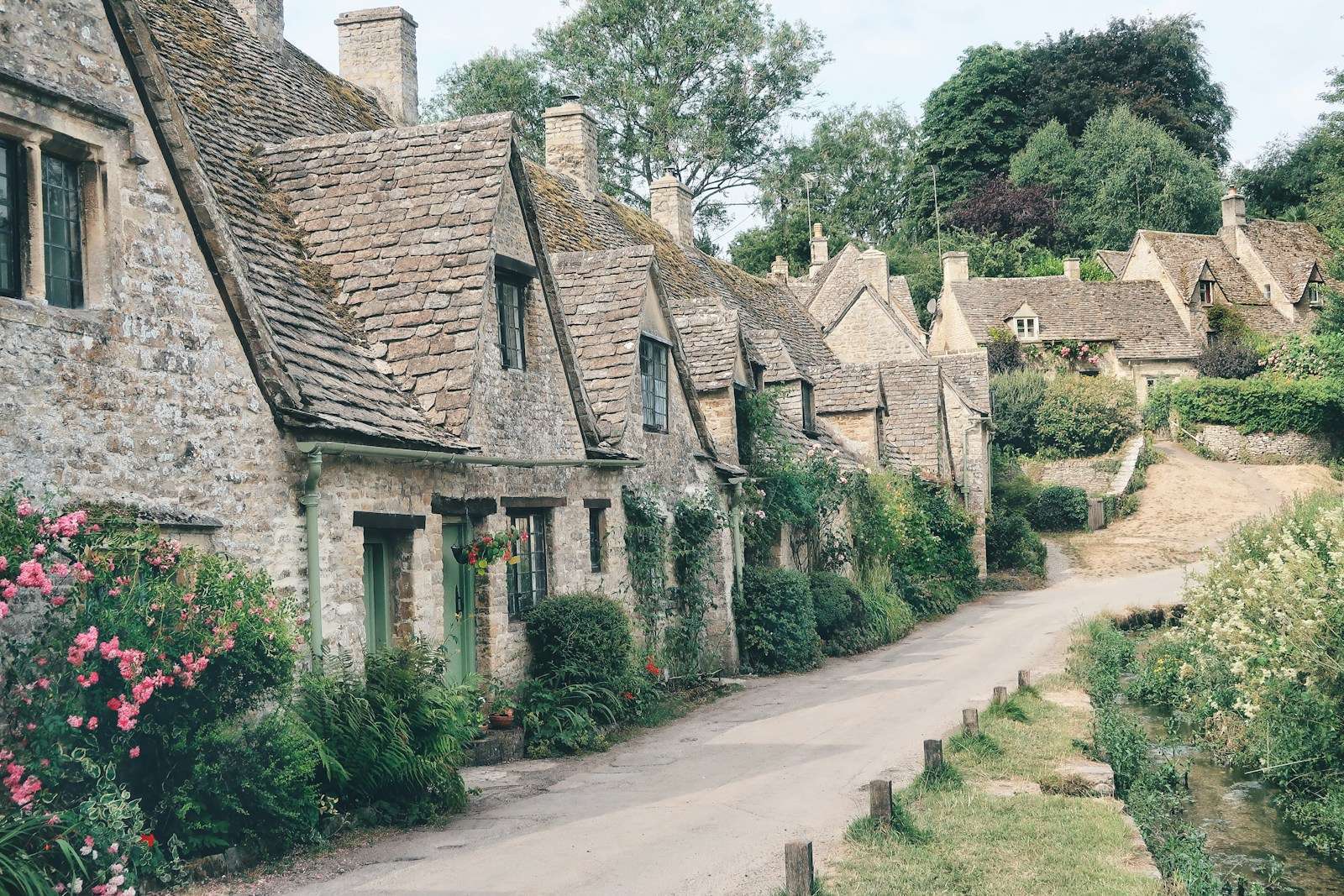
- Bibury per the alarm is the separate decision: Arlington Row’s weavers’ cottages — the lane on passports and postcards, among the most photographed in the country — sits away from the rail cluster, coach-mobbed by mid-morning; early arrival or deliberate omission are the two sane plays.
- The footpath stretch is the day’s soul: field paths and sections of the Cotswold Way or Monarch’s Way link villages at limestone-wall, sheep-and-stile pace — Stow to the Slaughters to Bourton being the canonical two-hour version, downhill the right direction.
- The pub lunch per the alarm is structural, not optional: the villages’ coaching inns and stone pubs are the region’s living rooms — booked ahead on summer weekends — and the wool-money churches (Northleach and Chipping Campden the connoisseur pair) carry the history between courses.

Getting there
The train-to-Moreton spine is the straight version: direct services, a real town at the far end, and the 801-class local buses reaching Stow and Bourton on schedules worth photographing at arrival per this network’s standing habit. Drivers unlock Bibury, Broadway, and the scattered south — at the price of single-track lanes and honeypot parking. Tours solve geography by coach seat, which the alarm’s whole structure argues against. The walking segment wants ordinary boots and the OS app; the paths are signed, stiled, and shared with sheep who were here first.
The day
Moreton’s high street opens it — coaching inns, coffee, the Tuesday market if the calendar cooperates — then the bus up to Stow: the great sloping square, the antique shops’ economy, and St. Edward’s north door framed by twin yews (the Tolkien-door claim is local legend, enjoyed as such). The footpath takes the middle hours per the alarm: down through the fields to Lower and Upper Slaughter — the mill, the brook, the villages too small for coaches — and on into Bourton along the Windrush. Bourton at walking-arrival feels won rather than queued: the low bridges, the model village’s tiny recursion, tea or the pub by appetite. The bus-and-train chain reverses home. The Bibury variant per the alarm swaps all of it for a dawn drive and Arlington Row before nine — a different day with one perfect photograph in it.
When to go
April–June runs blossom, lambs, and the walking weather; September–October golds the beeches and thins the coaches — the two windows this network would pick. July–August delivers the postcard at full occupancy: Bourton and Bibury queue by 11, and the footpath’s advantage doubles. Winter strips the hills to smoke-and-stone essentials with pubs at their fireside best and buses at their thinnest — a valid short version built around one village and one long lunch. Market days (Moreton Tuesdays) and summer weekend lunch bookings are the only calendar admin the day needs.
Frequently Asked Questions
Which villages should I actually pick?
Car-free: the Moreton–Stow–Slaughters–Bourton chain per the alarm’s structure — one bus, one walk, done properly. Driving: add Bibury early or Chipping Campden’s wool-church perfection, or trade the whole cluster for Broadway and the escarpment. The failure mode is six villages at forty minutes each; the fix is two at two hours each.
Is Bourton worth the crowds?
Arriving on foot through the Slaughters, yes — the bridges and the Windrush earn their fame, and the walk delivers you past the queue psychology. Arriving by coach at noon in August, it’s a car park with a stream. The model village (Bourton in 1:9 scale, containing its own model of the model) is genuinely charming recursion for the price.
What’s the Arlington Row fuss about?
A 14th-century wool store converted to 17th-century weavers’ cottages, composed against the Coln and the meadow like a painting — which is why it’s on UK passports and half the calendars in the country per the alarm’s most-photographed claim. It takes four minutes to see and one dawn to photograph properly. Bibury’s trout farm and church add the supporting half hour.
How serious is the walking?
Gentle by design: field paths, stiles, waymarks, and two hours at conversation pace for the Stow–Bourton canonical stretch — ordinary fitness and shoes that accept mud. The full Cotswold Way (102 miles along the escarpment) is a different, glorious animal for a different trip; the day-trip version borrows its easiest miles.
Cotswolds or Oxford from London?
Oxford (documented on this network with its Friday-release college mechanics) for colleges and city texture at half the train time; the Cotswolds for stone villages and field paths. City day versus landscape day — and since Moreton’s line runs through Oxford, the ambitious calendar stacks them as neighbors rather than rivals.